Film Fill: Enhancing Heat Transfer Efficiency in Cooling Towers
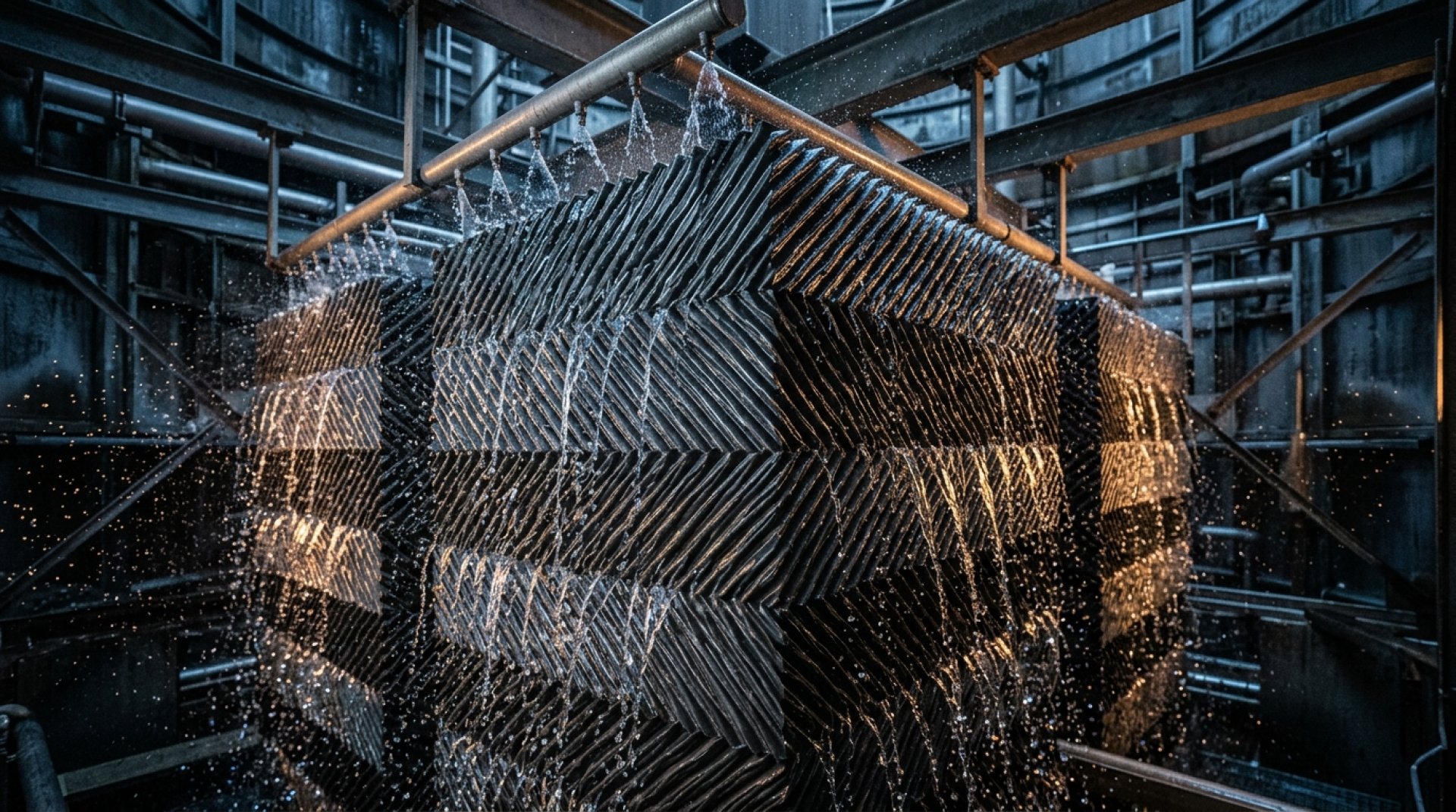
In industrial cooling processes, a cooling tower's efficiency does not rely solely on fan size or water flow rate. The crucial heart determining its Heat Exchange Capacity is the internal component called 'Fill Media', especially 'Film Fill', which is the most popular technology in modern cooling tower systems.
The Engineering Mechanism of Film Fill in Heat Exchange
The fundamental principle of Film Fill is to maximize the Surface Area within a limited volume. It achieves this by spreading the water falling from the spray nozzles into a Thin Film coating the surfaces of the fill material. This process significantly increases the Air-Water Interface, resulting in highly efficient Evaporative Cooling.
Compared to traditional Splash Fill that relies on breaking water droplets, Film Fill provides a much higher Heat Transfer Coefficient. Because the thin water film has low thermal resistance, the heat inside the water transfers to the surface and evaporates into the airstream much faster.
Structural Design and Flute Geometry
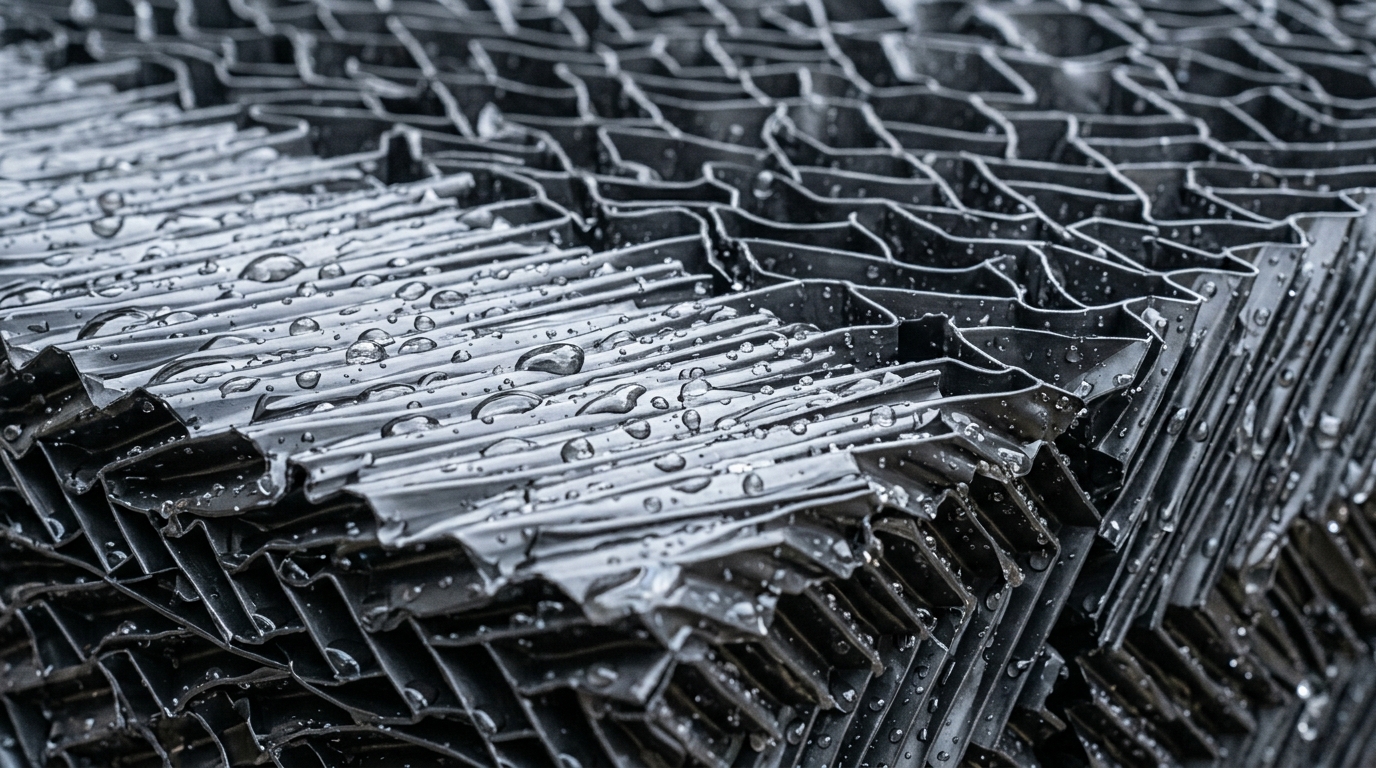
Thermal Engineers must carefully consider the structural design of Film Fill, which typically consists of assembled Corrugated Sheets. The choice of flute design directly affects performance:
- Cross-Flute Design: Alternating corrugated sheets cause air and water streams to constantly collide and change direction. This increases Turbulence, which is excellent for heat exchange but comes with a higher Static Pressure Drop.
- Vertical Flute Design: Designed to minimize clogging by allowing air to flow more freely. It is ideal for water sources with high suspended solids. Although it offers less surface area than cross-flute designs, it provides long-term stability in harsh environments.
Material Science in Cooling Systems: PVC vs PP
Selecting the right material for Film Fill is vital for the system's lifespan and stability:
- Polyvinyl Chloride (PVC): The widely used standard material, known for being self-extinguishing and possessing high mechanical strength. However, PVC has temperature limits, generally not exceeding 55-60°C; otherwise, deformation may occur.
- Polypropylene (PP): Suitable for High-Temperature Cooling where inlet water temperatures reach up to 80°C, or in industries using highly corrosive chemicals. PP offers better chemical resistance than PVC but is more expensive and requires additional Flame Retardant additives.
The Impact of Fouling and Pressure Resistance
The most significant challenge in using Film Fill is Foulingthe accumulation of biofilm, scale, and silt. When these adhere to the film surface, they cause two main negative impacts:
- Thermal Degradation: Dirt acts as thermal insulation, hindering the heat exchange between water and air, causing the Cold Water Temperature to rise above the designed value.
- Pressure Drop Increase: Clogging in the flute gaps forces the fan to work harder to drive air through the Fill Pack, increasing the motor's amperage and the risk of drivetrain failure.
Therefore, engineers must prioritize Water Treatment and the use of Biocides to control the growth of Legionella bacteria and algae within the system.
Selection and Maintenance for Sustainability
When replacing or retrofitting Film Fill, the L/G Ratio (Liquid-to-Gas Ratio) must be recalculated to match the specific fill's properties. Choosing a fill with excessive surface area can lead to a pressure drop the fan cannot handle, while choosing a fill that is too sparse will fail to provide the cooling capacity the machinery requires.
Monitoring efficiency via the 'Approach' value (the difference between the Cold Water Temperature and the Wet Bulb Temperature) is the best indicator of whether your Film Fill is operating optimally. If the Approach begins to widen, it is time for chemical cleaning or considering a Fill Pack replacement.
Conclusion
Film Fill is an engineering component that directly impacts the Energy Efficiency of buildings and industrial plants. Understanding thermal properties, selecting the right material for site conditions, and maintaining a strict Preventive Maintenance program will help the Cooling Tower operate at peak performance, reduce energy costs, and effectively extend the lifespan of central HVAC systems and machinery.