What Is a Heat Exchanger? How It Works & Applications
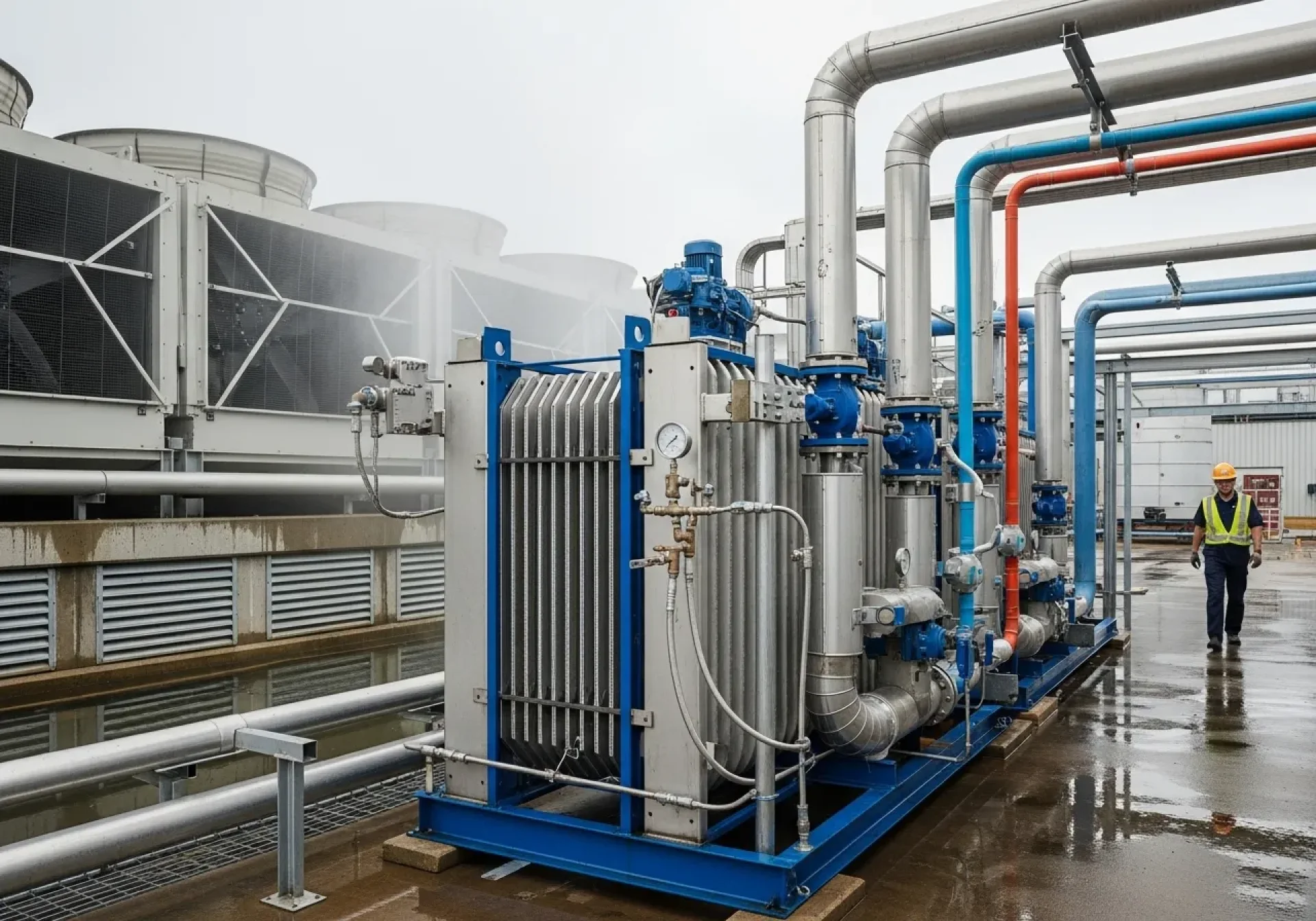
In every industry that deals with energy, heat, and fluids, one of the most critical pieces of equipment is the heat exchanger. This device enables efficient transfer of thermal energy from one fluid to another without direct contact between the two streams. Proper control of heat-exchange characteristics has significant impacts on system stability, safety, and operating costs.
More broadly, heat exchangers are not confined to factories; they are present in everyday lifecar radiators, air conditioners, refrigerators, and even home heating systems. Understanding how they work and the types available helps engineers, industrial operators, and general users select and operate them appropriately and safely.
What Is a Heat Exchanger?
A heat exchanger is a device that transfers heat between two fluids using a separating wallsuch as metal plates or tubesthat serves as the medium for heat conduction. Heat flows from the hot fluid to the cold fluid without mixing. The exchange can be liquid-to-liquid or liquid-to-gas, depending on the design and application. The most familiar example is the radiator in a car, which removes heat from engine coolant and releases it to ambient air via metal fins, allowing the engine to maintain the proper operating temperature without overheating.
Types of Heat Exchangers
Heat exchangers come in many configurations, each with distinct advantages and limitations. Selection depends on system characteristics, temperature, pressure, and the properties and cleanliness of the process fluids. Common types include:
- Shell & Tube Heat Exchanger: Consists of many tubes housed within a shell. One fluid flows inside the tubes, while the other flows across the shell side. It tolerates high pressures and temperatures, making it suitable for chemical, petrochemical, and power industries.
- Plate Heat Exchanger: Uses stacks of thin metal plates forming alternating channels for the two fluids. The large surface area enables rapid heat transfer. Common in HVAC and food & beverage applications.
- Air-Cooled Heat Exchanger: Uses fans and ambient air directly for cooling. Ideal for power plants or sites short of water; reduces water usage but consumes more fan power.
- Double-Pipe Heat Exchanger: A tube-in-tube arrangementcompact, simple to design, and able to withstand high pressure, though with less surface area than other types. Suitable for small duties.
Principles of Heat Transfer
Heat exchangers rely on conduction through the metal wall and convection within the fluids on both sides. Key factors include the temperature difference between the two streams, flow velocity, and the thermal conductivity of materials. Design typically determines the required heat transfer area, overall thermal resistance, and pressure drop to ensure efficient operation.
Importance to Industry
Heat exchangers are essential for energy savings because they allow recovery and reuse of waste heatfor example, using exhaust heat to pre-warm water for other process steps. They also protect equipment from overheating and improve safety by preventing direct contact between hazardous fluids. Real-world applications include temperature control of process streams in chemical plants, steam-to-water heat exchange in power plants, and strict hygiene and temperature control in food processing.
Maintenance & Considerations
To extend service life, heat exchangers require regular maintenance. If neglected, scale, oil fouling, or corrosion can develop, reducing heat-transfer efficiency and increasing energy consumption. Key practices include:
- Regularly check for leaks and verify system pressure.
- Clean scale and fouling on a scheduled basis.
- Select corrosion-resistant materials such as stainless steel or titanium.
- Log operating parameterse.g., ΔT and pressure dropto analyze degradation trends.
Conclusion
Heat exchangers play a vital role in both industrial systems and everyday energy use. Understanding how they work, the available types, and proper maintenance helps users choose the right equipment, improve efficiency, reduce costs, and extend equipment life. Whether in power generation, chemical processing, HVAC systems, or automobile engines, heat exchangers are indispensable and will continue to be a core technology for thermal energy management worldwide.