How Counter Flow Cooling Towers Work: Why Opposing Air and Water Flow is Superior
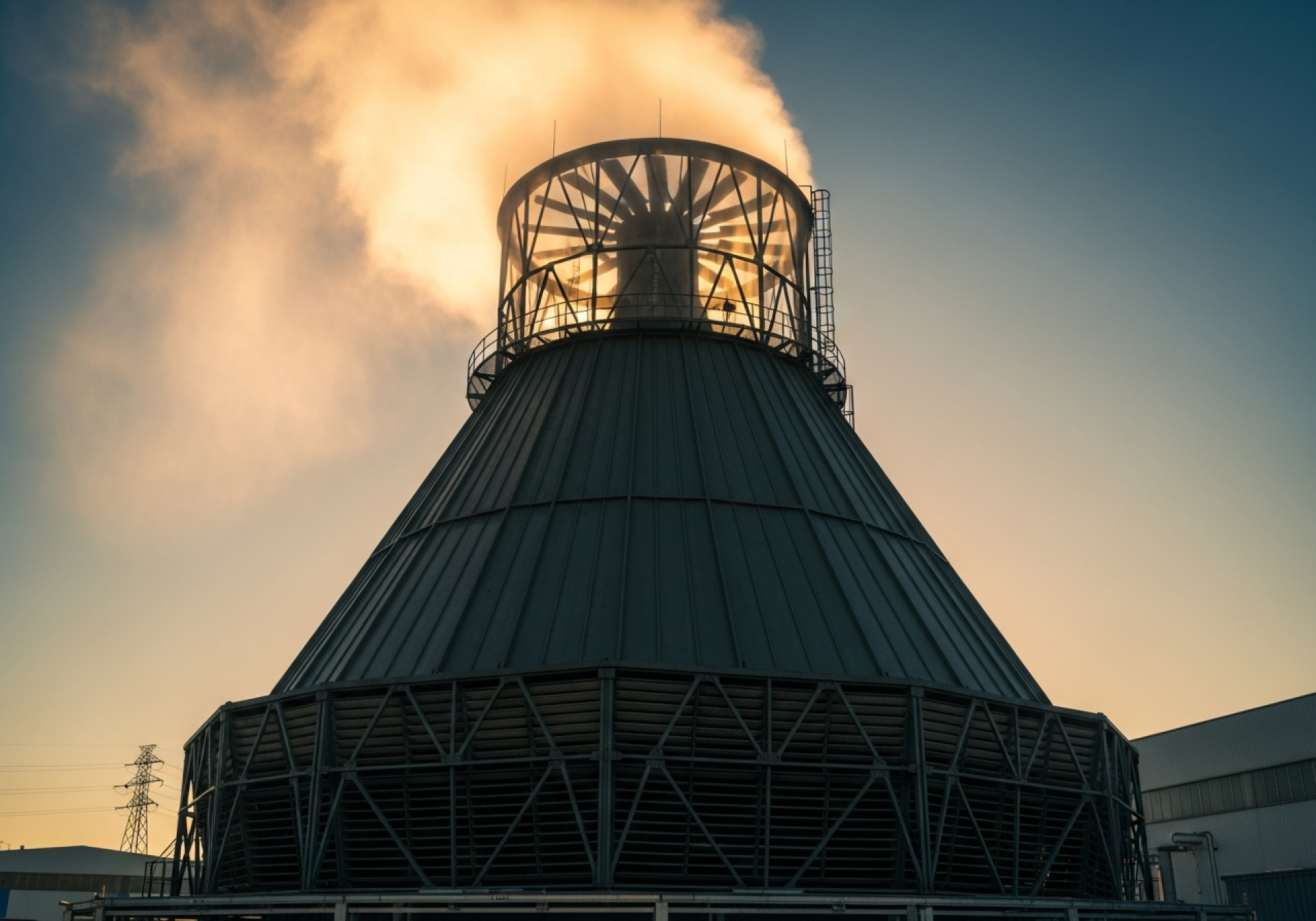
A Counter Flow Cooling Tower is designed using aerodynamic principles that create "completely opposing" vertical flow directions for water and air. Hot water is pumped to the top and sprayed through nozzles, falling downward through fill media by gravity. Simultaneously, exhaust fans mounted at the top draw cool air from intake louvers at the bottom, forcing it upward to meet the water in the opposite direction (180 degrees).
This design creates the most significant thermodynamic advantage: the driest, coolest air (inlet air) contacts the water requiring maximum cooling (outlet water) at the bottom of the tower, while progressively warmer air meets the hottest water at the top. This results in consistent driving force for heat transfer throughout the fill height, achieving the highest heat transfer efficiency among water-based cooling systems.

Engineering Structure and Advantages In-Depth
The Counter flow system has distinct complexity and advantages compared to Cross flow systems (perpendicular water flow) across multiple dimensions:
1. Water Distribution System The Critical Heart
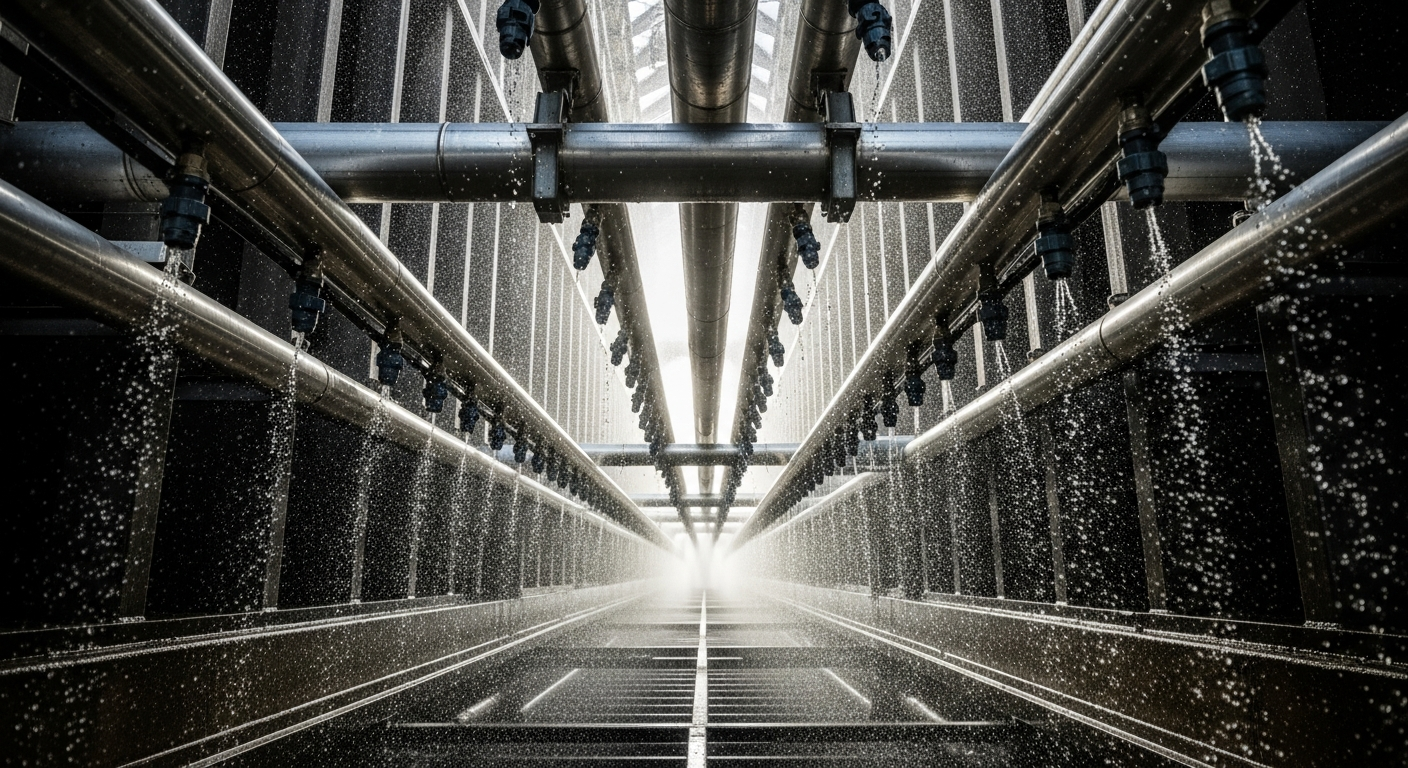
While Cross flow systems use perforated basins that simply release water by gravity feed, Counter flow systems require pressurized pipe and nozzle systems (Pressurized Spray System) to spray water into fine droplets covering the entire cross-sectional area of the fill media.
Advantage: Fine spray significantly increases air contact surface area.
Challenge: Requires slightly higher pump head pressure to force water through nozzles, and nozzle clogging must be monitored carefully.
2. Efficiency vs. Footprint
Because the structure allows air intake from all directions (in cylindrical models) or from below flowing straight up, the design can be tall and slender.
Land savings: For facilities with expensive land or limited space, Counter flow delivers higher cooling capacity (Ton-Refrigeration) per installation area (square meters) compared to equivalent Cross flow units.
3. Fill Media and Aerodynamics
Counter flow fills are typically denser and more complex, designed to maximize air-water contact time. This creates higher static pressure drop (air resistance), requiring slightly higher wattage fans to achieve equivalent airflow compared to Cross flowbut delivers more stable cooling performance in return.
Frequently Asked Questions (FAQ) About Counter Flow
Q1: Which is betterCounter flow or Cross flow Cooling Tower?
It depends on space and application. Counter flow suits limited spaces requiring high efficiency with relatively clean water (nozzles clog easily). Cross flow suits larger areas requiring easy maintenance (walk-in basin access) and tolerates water with higher sediment content.
Q2: How can you tell if spray nozzles are clogged?
Watch for abnormally rising outlet water temperatures, or visually inspect through air intake louvers for dry spots where water isn't falling evenly across the fill. For non-accessible models, monitor the pressure gauge on supply pipesrising pressure indicates nozzle blockage.
Q3: Why are Counter flow Cooling Towers typically tall?
Height directly affects heat exchange retention time. Taller towers mean water takes longer to travel from top to bottom, allowing extended air contact and improved heat dissipation. Tall designs maximize the value of gravitational force in the cooling process.