What is Cooling Tower Blowdown? The Key to Extending System Lifespan
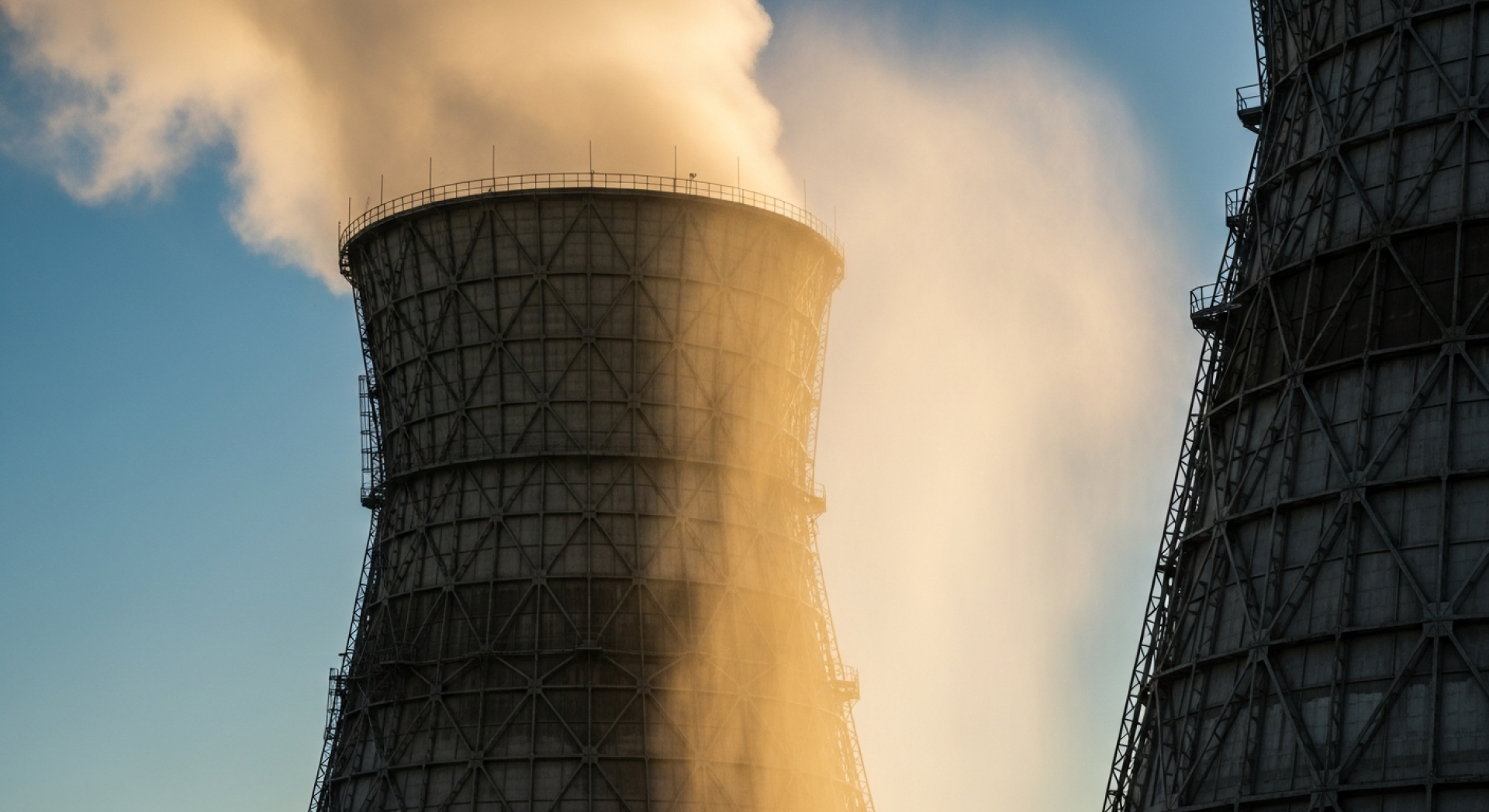
What is Cooling Tower Blowdown? And Why is it Critical for Cooling Systems?
Cooling Tower Blowdown (also known as Bleed-off) is the process of draining a portion of water from the cooling tower basin to remove minerals, sediments, and suspended solids that have become overly concentrated, before adding fresh make-up water to dilute the remaining concentration.
The ultimate purpose of Blowdown is not simply to discard water, but to control the Cycle of Concentration (COC)the ratio of dissolved solids concentrationwithin a range that scale-inhibiting chemicals can effectively manage. Neglecting this process allows accumulated minerals to form "scale" that adheres firmly to heat exchange surfaces, dramatically reducing cooling efficiency and eventually damaging equipment.
The Scale Formation Mechanism: Why Does Cooling Tower Water Become Concentrated?
To understand the necessity of Blowdown, we must first understand the physics of evaporation. When a Cooling Tower operates to reduce water temperature, it uses evaporation to release a portion of the water into the atmosphere. The key principle is that only pure water (HO) evaporates.
What doesn't evaporate are the minerals and dissolved solidscalcium, magnesium, silica, and chloride. These substances continue to circulate and accumulate in the basin. The more water evaporates, the higher the concentration of these minerals becomes, measured as TDS (Total Dissolved Solids).
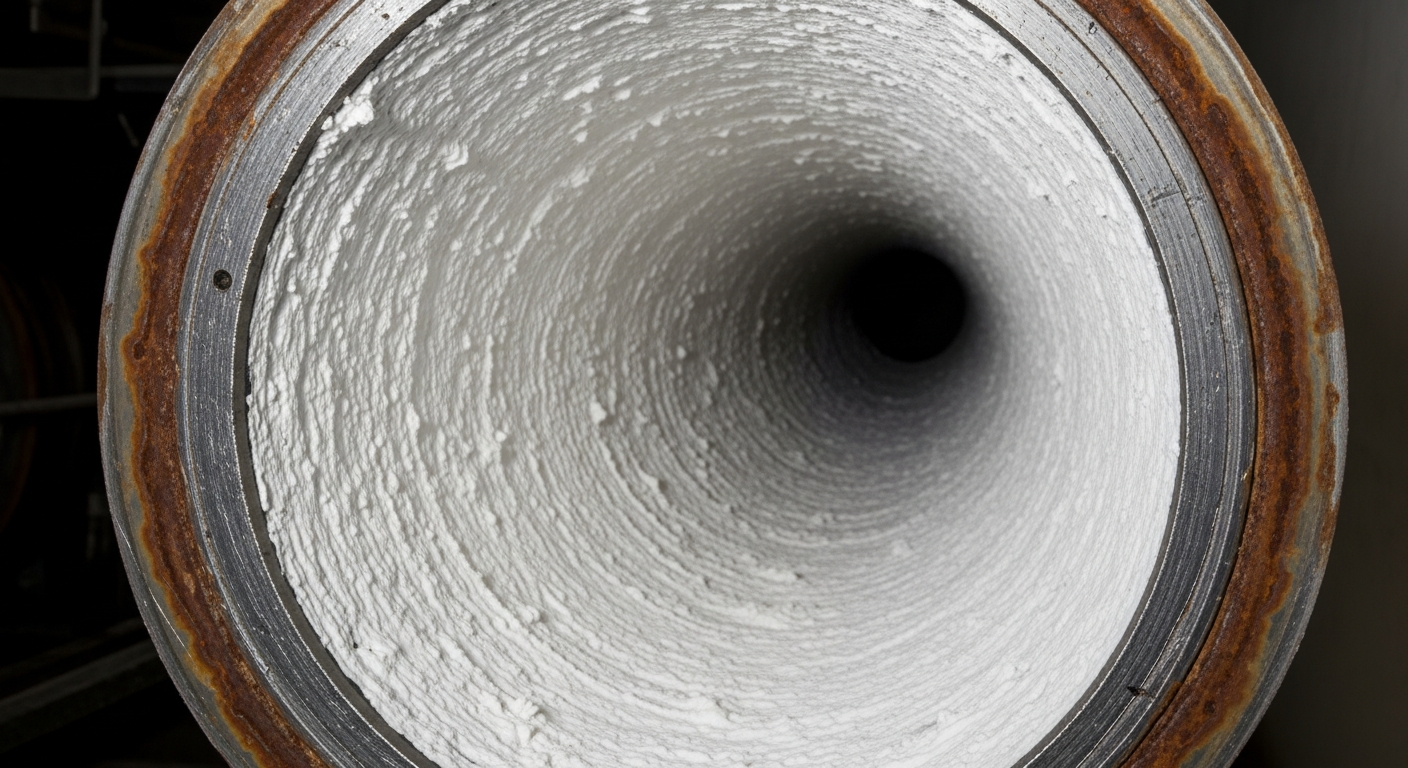
A simple analogy: boiling salt water. As water evaporates, salt crystallizes out. The same happens in a Cooling Tower. If we allow water to continuously evaporate without draining the old water, minerals will reach supersaturation beyond their solubility limit and crystallize into hard calcium deposits on condenser tubes and fill media. This scale acts as an excellent thermal insulator, preventing effective heat exchange, leading to high pressure problems in the Chiller system and skyrocketing electricity costs.
Calculating Blowdown Rate and Warning Signs
We cannot visually detect mineral concentration until scale has already formed. The most accurate method is measuring Electrical Conductivitythe more minerals present in water, the better electricity flows through it.
Blowdown Rate Formula
Engineers calculate the required blowdown volume to maintain balancepreventing scale formation without wasting water. The formula is straightforward:
Blowdown (B) = Evaporation (E) ÷ (Cycle of Concentration (COC) - 1)
Where:
- B (Blowdown): Volume of water to be drained (m³/hr)
- E (Evaporation): Volume of water evaporated during cooling (typically about 1% of circulation rate per 5-6°C temperature drop)
- COC (Cycle of Concentration): Target concentration ratio to be maintained
Types of Industrial Blowdown Methods
1. Manual Blowdown
Relies on operators manually opening the drain valve at scheduled times, such as 15 minutes daily. This method carries the highest risk and is not recommended for standard facilities because daily evaporation rates vary significantly.
2. Continuous Blowdown
Creating a small opening or partially opening a valve to allow continuous water flow 24 hours a day. This eliminates the risk of forgetting to open the valve but offers no precision control, resulting in water and chemical waste.
3. Automatic Blowdown Control (Recommended)
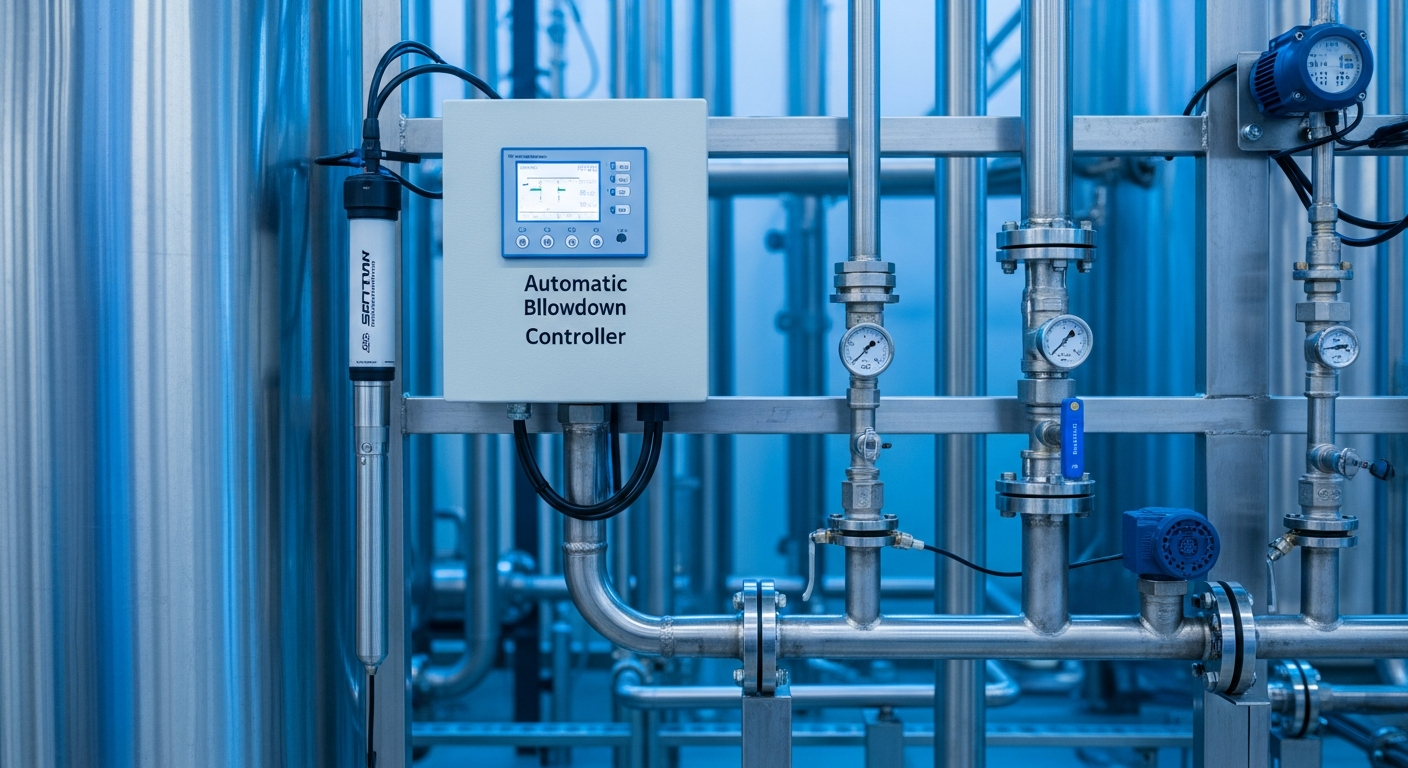
Using Conductivity Controller technology with a sensor continuously submerged in the water, measuring conductivity in real-time.
- When conductivity exceeds the set point Opens Solenoid Valve to drain water
- When fresh water enters and conductivity decreases Closes the valve
This method is the most accurate and can save up to 20-30% on water and chemical costs.
Frequently Asked Questions (FAQ) About Blowdown
Q1: How often should Cooling Tower Blowdown be performed?
There is no fixed frequency in hours or minutes because it depends on heat load and evaporation rate. The correct approach is to perform blowdown only when conductivity exceeds the established standard threshold. Automatic systems address this requirement most effectively.
Q2: Can Blowdown water be used for watering plants?
Generally, not recommended for direct plant irrigation. Cooling Tower water contains high mineral concentrations (high TDS) and, more importantly, contains scale inhibitors and biocides that may be toxic to plants or animals. If reuse is desired, proper wastewater treatment is required first.
Q3: Is a higher Cycle of Concentration (COC) always better?
Yes, but with limits. Higher COC values significantly reduce water consumption, but if too high (exceeding 6-7 Cycles), scale inhibitors may become ineffective, risking silica scale formationwhich is extremely difficult to remove. Therefore, consult specialists to determine the optimum cycle for each specific facility.