Benefits of Industrial Thermal Insulation for Heat Exchangers

In heat-intensive industrial systems, the Heat Exchanger is vital. To maintain peak efficiency, Industrial Thermal Insulation is a non-negotiable requirement.
Significant Reduction in Energy Loss
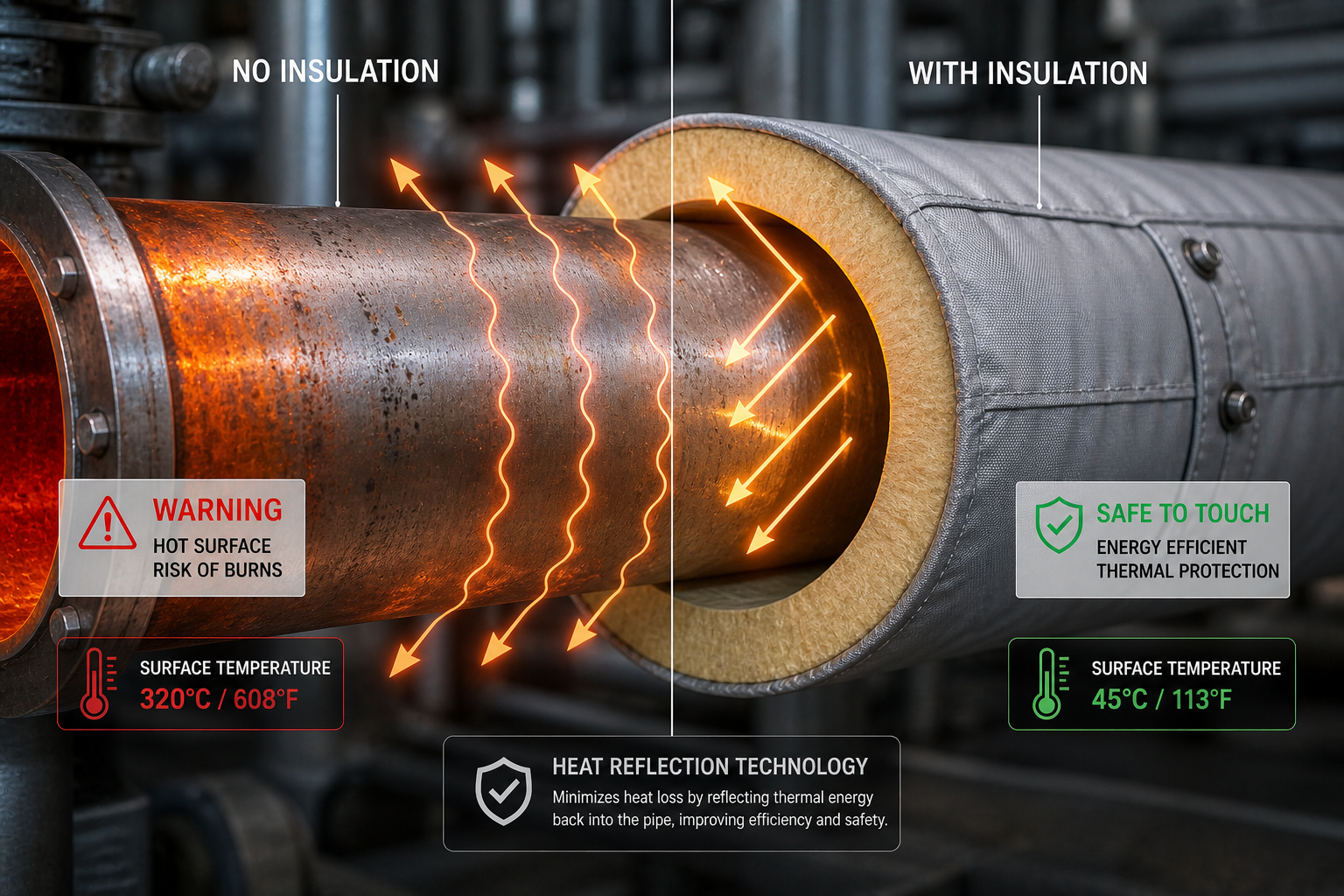
Without insulation, thermal energy escapes into the ambient air. Proper insulation barriers keep heat within the system, resulting in substantial savings on fuel and electricity costs.
Precise Process Temperature Control
Thermal insulation eliminates external environmental variables, ensuring system stabilitycrucial for high-precision sectors like food and petrochemical processing.
Enhanced Personnel Safety
Uninsulated surfaces can reach dangerous temperatures. Insulation serves as Personal Protection, preventing accidental contact burns and improving workplace safety.
Preventing Condensation and Corrosion (CUI)
In cold systems, insulation prevents surface condensation, which leads to rust and Corrosion Under Insulation (CUI), thereby extending the equipment's operational life.
Conclusion
Installing thermal insulation is a high-return investment (ROI), delivering value through energy savings, safety, and reduced long-term maintenance costs.