Industrial Valve Selection Guide for Cooling Tower Systems
Last updated: 4 May 2026
986 Views

Managing cooling systems is vital, with Industrial Valves serving as the primary control for water circulation in Cooling Towers and Heat Exchangers.
The Importance of Valves in Cooling Towers
Valves regulate flow and balance pressure; failure can lead to equipment overheating. Corrosion-resistant valves are also critical during chemical dosing to prevent scale buildup and hazardous leaks.
Common Valve Types for Cooling Systems
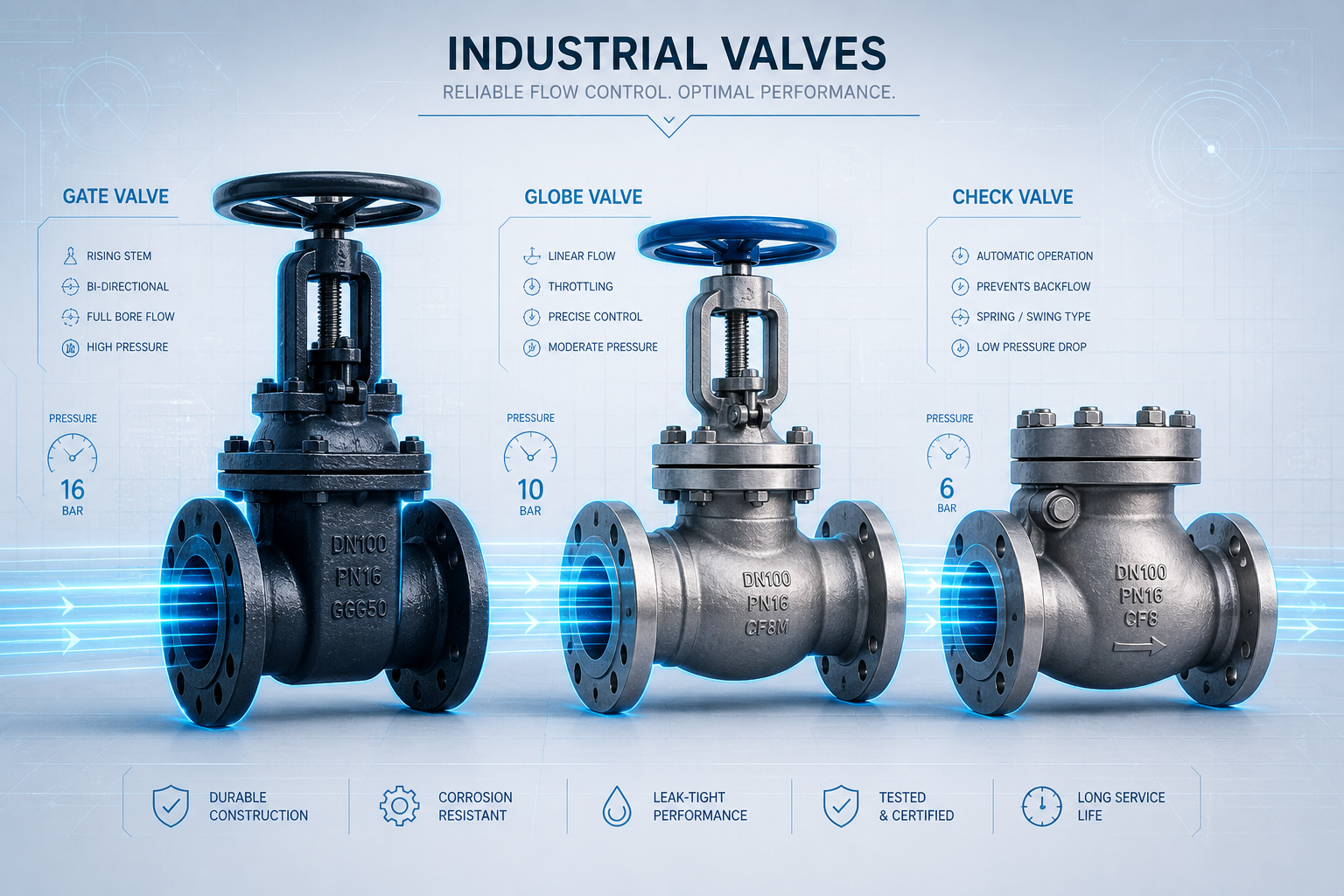
- Gate Valve: Ideal for full-flow isolation in main water lines with low pressure drop.
- Butterfly Valve: Lightweight and space-efficient, perfect for large-scale flow regulation.
- Globe Valve: Designed for precise throttling and detailed pressure control.
- Check Valve: Prevents backflow to protect pumps from mechanical damage.
- Ball Valve: Fast-acting and durable, typically used for small pipes and dosing points.
Key Selection Factors
- Media Type: Materials must resist corrosion, such as Stainless Steel or PTFE-lined options.
- Pressure & Temperature: Valves must match the system's specific Pressure-Temperature Ratings.
- Size & Connection: Ensure size and connection types (Flanged, Threaded) comply with existing piping.
Conclusion
Choosing the right industrial valve is an investment in safety and efficiency, significantly reducing Downtime and long-term maintenance expenses.
Related Content

For cooling tower systems, circulating water with chloride content above 750 parts per million (ppm), expressed as sodium chloride (NaCl),
11 Aug 2025
The drive shaft in a cooling tower transmits power from the motor to the fan gearbox in a high-moisture, corrosive environment. Maintenance focuses on corrosion protection, precise alignment (compensating for thermal growth), shaft balancing, and avoiding critical speed to prevent severe vibration and extend the life of the gearbox and bearings.
30 Oct 2025