Cooling Tower Fans: Blade Engineering and Airflow Optimization
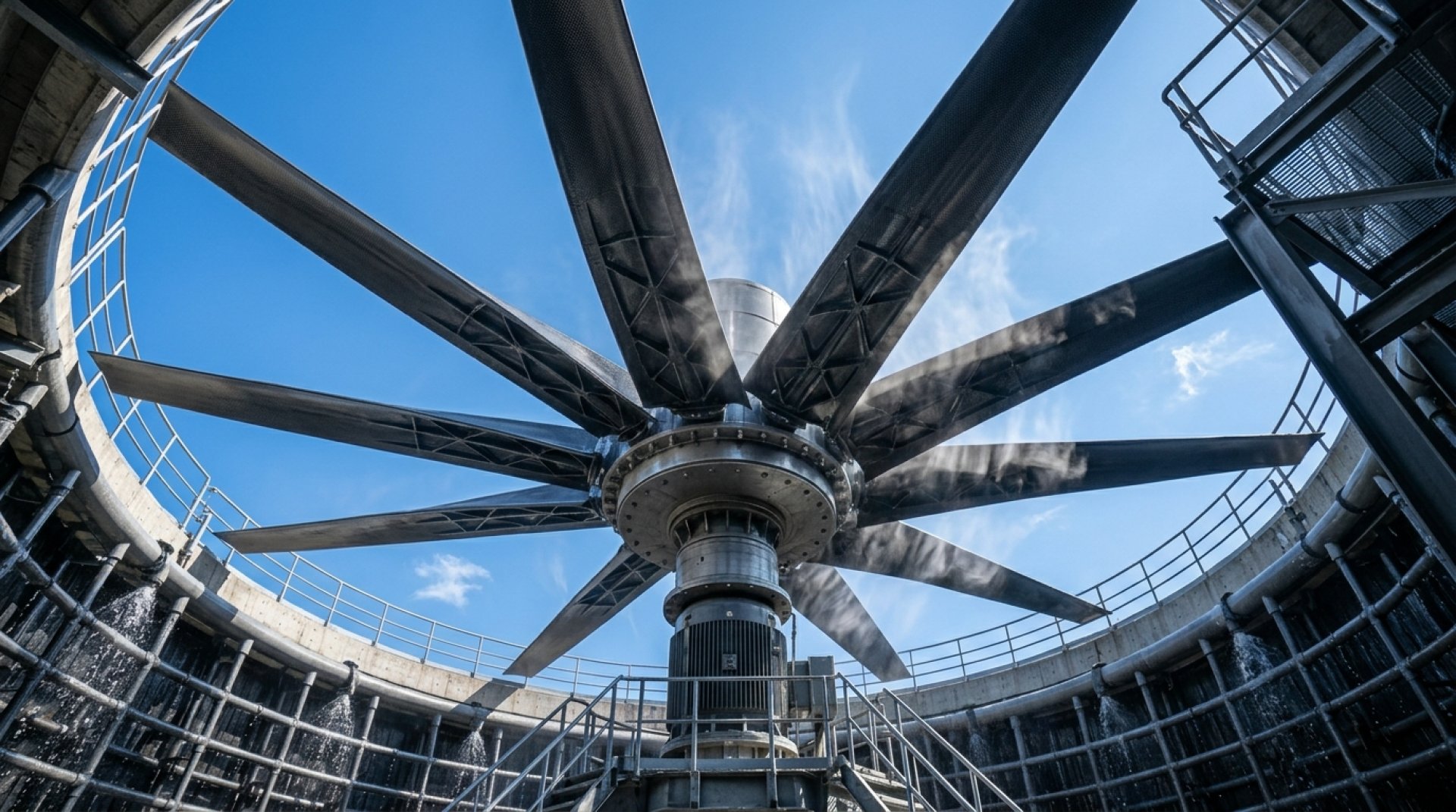
In a Cooling Tower system, the fan acts as the primary mechanical draft mechanism to extract latent heat from water through evaporation. The efficiency of a cooling tower fan is not measured merely by the volume of airflow it generates, but also by its ability to overcome the static pressure within the cooling tower and its overall Energy Efficiency.
Fan Blade Engineering and Airfoil Technology
Modern cooling tower fan blades are designed based on advanced aerodynamics, utilizing an Airfoil profile instead of simple flat or curved blades.
The Airfoil design creates a pressure difference between the front and back of the blade, generating lift that rapidly pushes the air in the desired direction. This offers the following engineering advantages:
- High Lift-to-Drag Ratio: Reduces friction between the blade and the air, meaning the motor doesn't have to work as hard to overcome aerodynamic resistance.
- Uniform Velocity Profile: Ensures airflow passes through the Fill Media evenly across the entire area, significantly reducing dead zones inside the tower.
- Noise Reduction: Decreases noise caused by air turbulence at the blade tips.
Material Science: From Metal to FRP (Fiberglass Reinforced Plastic)
Historically, blades were often made from aluminum or galvanized steel. Today, FRP (Fiberglass Reinforced Plastic) has become the standard material for heavy industry due to its superior properties:
- Corrosion Resistance: The environment inside a cooling tower has high relative humidity and often contains water treatment chemicals. FRP does not rust or corrode, giving it a lifespan several times longer than metal.
- Lightweight & High Strength: The lightweight nature of FRP reduces the Brake Horsepower (BHP) required for start-up torque and lowers the cumulative load on the gearbox and motor bearings.
- Vibration Damping: Composite materials absorb vibrations better than metals, helping to reduce long-term structural damage to the tower.
Pitch Angle Adjustment and Energy Efficiency
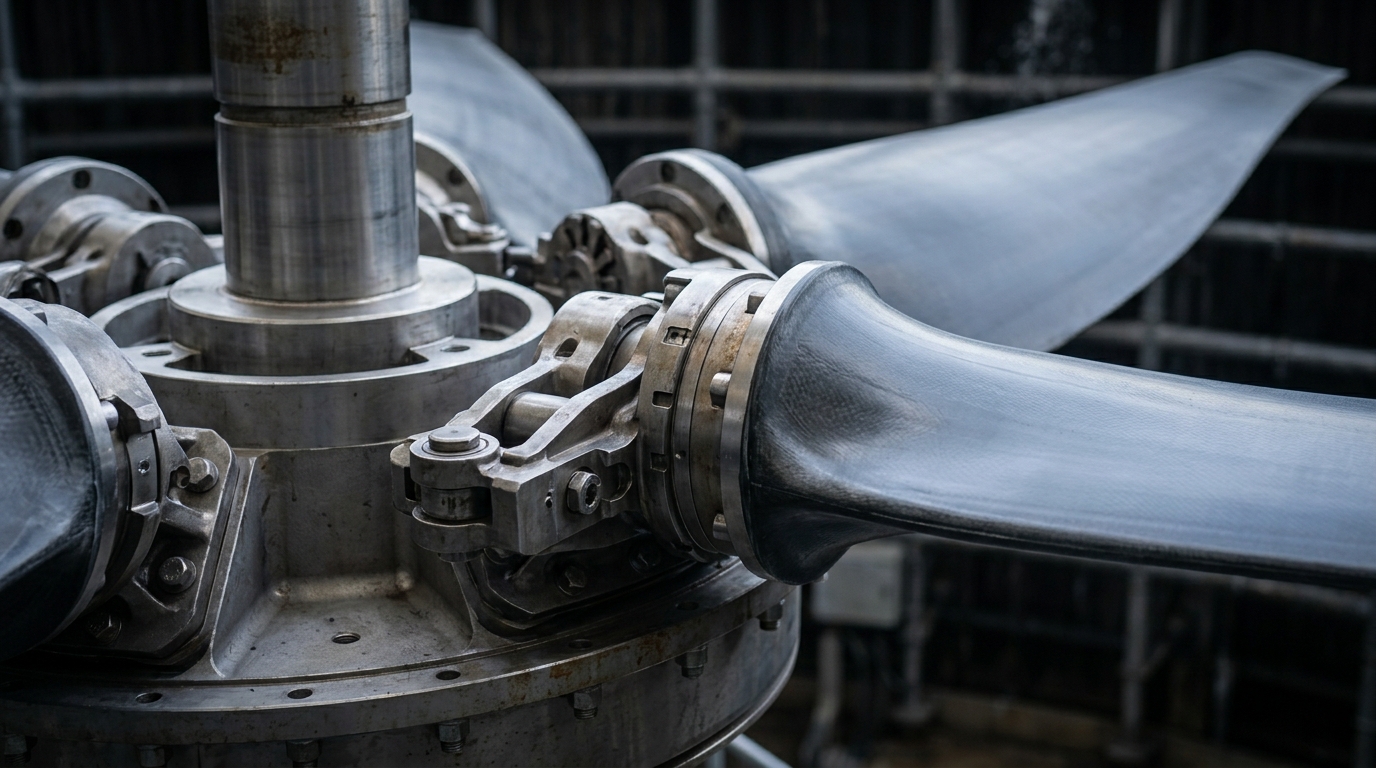
One of the crucial parameters thermal engineers must focus on is the Pitch Angle of the blades. Adjusting the pitch angle directly affects two factors:
- Airflow Volume (CFM): A wider angle increases the volume of air but simultaneously increases the motor's workload.
- Static Pressure Capability: The fan must have enough pressure to push air through the resistance of eliminators, fill media, and louvers.
During Cooling Tower Optimization, engineers use amperage measurement tools along with the fan's performance curve calculations to adjust the pitch angle. The goal is to achieve maximum airflow without overloading the motor. Additionally, installing a Variable Frequency Drive (VFD) is a highly efficient solution to control fan speed based on the actual heat load, which can save up to 30-50% in energy during periods of low ambient temperature.
Mechanical Stability and Maintenance
Even a minor fault in the fan system can lead to severe damage. Preventive maintenance must cover the following critical aspects:
- 1. Vibration Analysis: Blades must undergo dynamic balancing according to the ISO 1940 standard. Excessive vibration is usually caused by unbalanced blades, degraded bearings, or a loose gearbox mounting, which could result in the blades striking the fan stack wall.
- 2. Tip Clearance: The clearance between the blade tips and the fan cylinder wall must be uniform. If the gap is too wide, air bypass occurs at the blade tips, significantly reducing fan efficiency.
- 3. Drive Train Alignment: Whether using a belt drive or a gear drive, the alignment between the motor shaft and the fan shaft must be highly precise to minimize heat accumulation and mechanical energy loss.
Conclusion
A cooling tower fan is not just a rotating device to create wind; it is an aerodynamic machine that must be designed and selected with precision. Choosing blades with the appropriate Airfoil profile, optimizing energy use through smart control systems, and enforcing strict maintenance will ensure the cooling system operates at peak performance, reduces operating expenses (OPEX), and sustainably extends the lifespan of all machinery in the system.