Cooling Tower vs Heat Exchanger: Which System is the Most Cost-Effective and Energy-Efficient?
What is a Cooling Tower and How Does it Work?
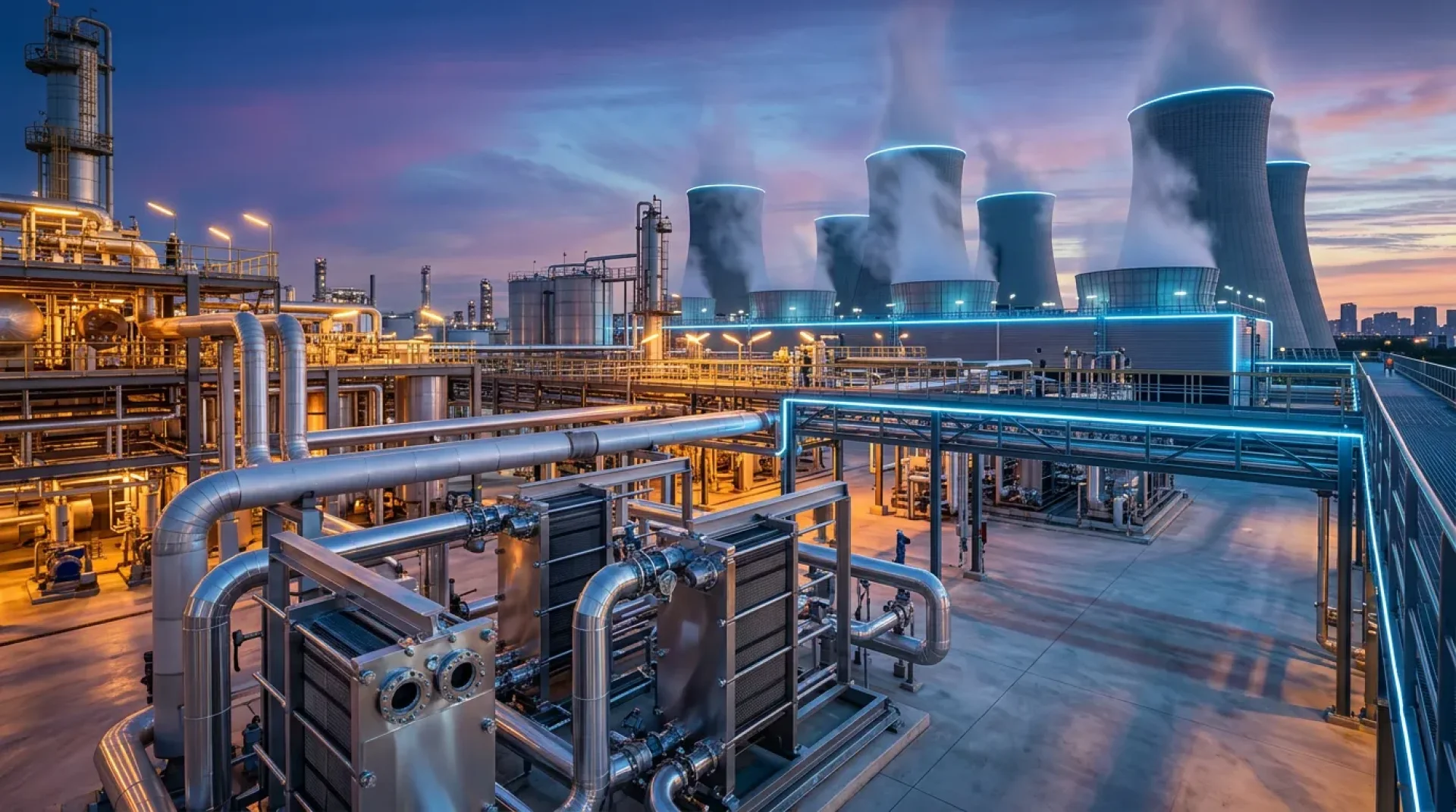
A Cooling Tower is a large structure designed to extract waste heat from industrial cooling water systems or water chillers and release it into the atmosphere. The working principle of a cooling tower relies on 'Evaporative Cooling', which is a highly efficient and energy-saving method.When hot water from the production process enters the cooling tower, it is sprayed through nozzles, dispersing into fine droplets that fall onto the fill media. Simultaneously, a large fan draws cool ambient air from the outside to interact with the water droplets. The contact between the air and water causes a small portion of the water to evaporate. This evaporation draws out the 'Latent Heat', causing the temperature of the remaining water that falls into the bottom basin to drop rapidly, ready to be pumped back to circulate through the machinery system again.
Advantages of Cooling Towers:
High Temperature-Reduction Efficiency: Capable of handling massive volumes of water and lowering temperatures close to the ambient air's wet-bulb temperature.Large-Scale Energy Savings: Ideal for power plants, oil refineries, or heavy industrial plants that release enormous amounts of heat.
Limitations of Cooling Towers:
However, using a cooling tower inevitably involves some water loss through evaporation and drift loss, necessitating a constant supply of make-up water. Furthermore, water exposed to the open air is prone to accumulating dust, debris, and bacteria, requiring rigorous water treatment management.
How Do Heat Exchangers Work Differently?
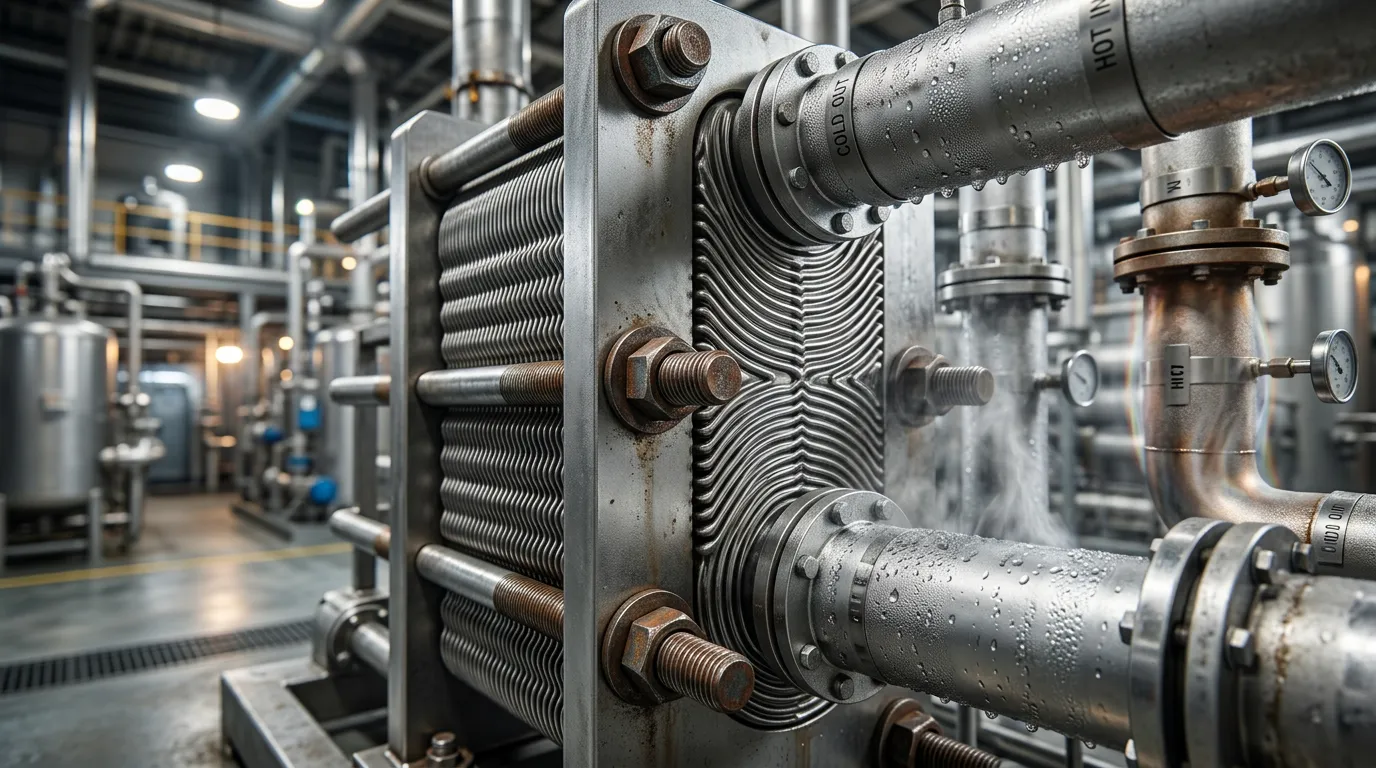
In contrast, a Heat Exchanger is a device designed to transfer heat between two fluids with different temperatures, separated by a solid barrier (such as a pipe wall or metal plate). This ensures the two fluids never physically touch or mix (Indirect Heat Transfer). These fluids can be water-to-water, gas-to-water, or refrigerant-to-machine oil.
Popular types of heat exchangers used in the industry include the Plate Heat Exchanger, consisting of thin, stacked metal plates that provide a massive surface area for heat transfer, and the Shell and Tube Heat Exchanger, consisting of numerous small tubes housed within a large cylindrical shell, widely used in processes involving extremely high pressures and temperatures.
Advantages of Heat Exchangers:
Maximum Cleanliness: Because the fluids do not mix, they are mandatory in the food, pharmaceutical, and beverage industries where contamination is strictly prohibited.
Heat Recovery: They can extract heat from wastewater to preheat clean water before it enters a boiler, saving tremendous amounts of overall energy.
Combined Usage: The Perfect Performance
In modern industrial systems, we often don't just choose one over the other but smartly utilize both devices together in what is called a Closed-loop system. The Heat Exchanger acts by extracting heat from the water or chemicals in the production process (Primary Loop) and transferring it to the cooling water in a closed system. This cooling water is then sent to the Cooling Tower to dissipate the heat into the atmosphere (Secondary Loop). This design protects expensive production machinery from scale and debris coming directly from the cooling tower, reduces maintenance frequency, and effectively extends the machinery's lifespan.
If you need experts to evaluate and install your thermal management systems, Innovek is ready to provide the most comprehensive and tailored solutions for your business.