
CHEMICAL INJECTION SKID SYSTEM
There are various methods for feeding chemicals into the water supply system, such as solution form, slurry form, and solid dry form. Several chemicals are used in water production and wastewater treatment systems, each with its specific filling procedure. The result of chemicals usage by the most efficient, careful monitoring is the main mandatory. The control systems can be categorized as follows
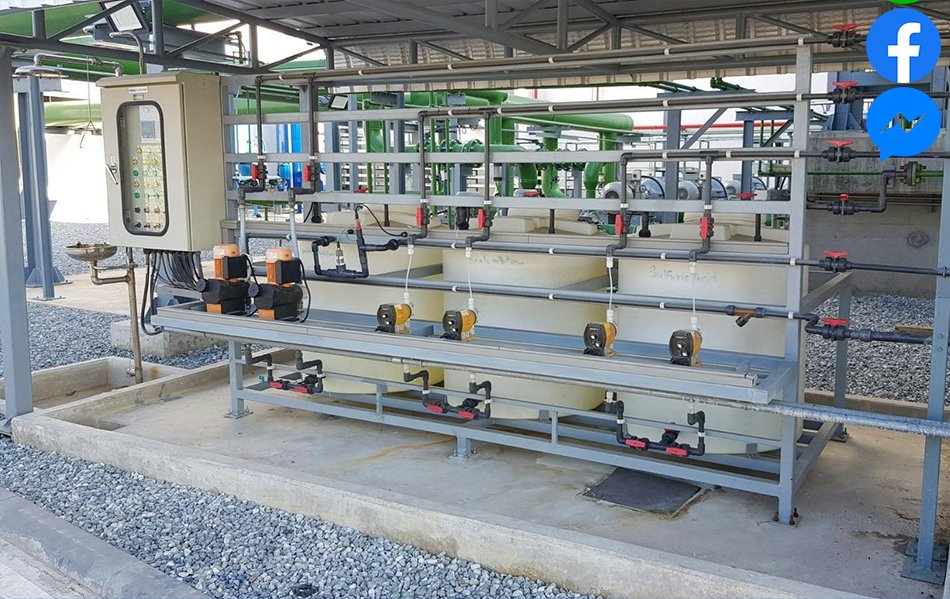
OPERATOR-BASED CONTROL
(OR MANUAL OPERATION)
Manual operation requires an operator to turn on and off each chemical filling system. It is suitable for small systems. The efficiency depends on an operators skill.
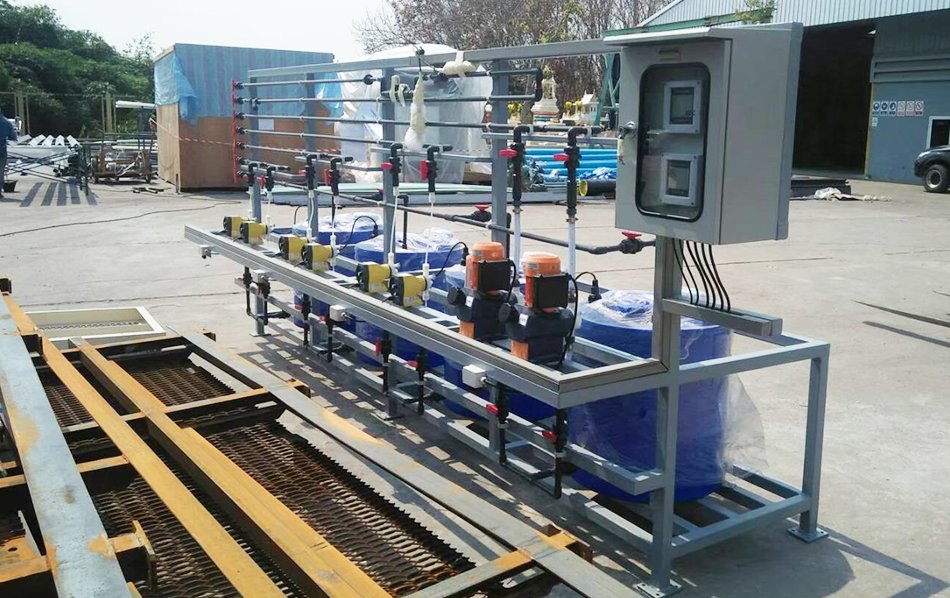
SEMI-AUTOMATIC
It is a combined method between the automatic system and human control. Therefore, the cost is saved from developing a full-control system.

FULLY-AUTOMATIC
Everything will be pre-programmed to be automatic. As a result, the maximum accuracy and little time loss for humans.
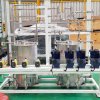
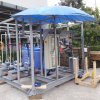
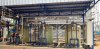
How a chemical injection system is controlled
- Operator-based (manual) How it works: An operator turns each chemical feed on and off by hand · Best suited to: Small systems. Results depend on the operator's skill
- Semi-automatic How it works: Automatic control combined with operator control · Best suited to: Plants that want automation without the cost of a full control system
- Fully automatic How it works: Every step is pre-programmed to run automatically · Best suited to: Systems that need the highest accuracy with the least operator time
Chemical feed forms
A chemical injection skid can feed chemicals into the water system in three forms: as a solution, as a slurry, or as a solid dry product. Each chemical used in water production and wastewater treatment has its own feeding procedure, and chemicals work best when the dosing is monitored carefully and continuously.
Information to send for a quotation
- The water system the chemicals are fed into: water supply, cooling water, or wastewater treatment
- The chemicals to be dosed, and whether each arrives as a solution, a slurry or a dry solid
- The control method you need: manual, semi-automatic or fully automatic
- The flow of the water system, if known
See the spray nozzle range, or request a quotation.