Splash Fill: High-Performance Solution for Heavy-Duty Cooling Towers

In the cooling processes of heavy industry, the challenge engineers face is not merely lowering water temperatures to the target, but maintaining that efficiency under circulating water conditions that may be highly contaminated. Splash Fill is therefore designed as the ultimate answer to problems that conventional Film Fill cannot handle, focusing primarily on durability and fouling prevention.
Heat Transfer Principles through Fragmentation
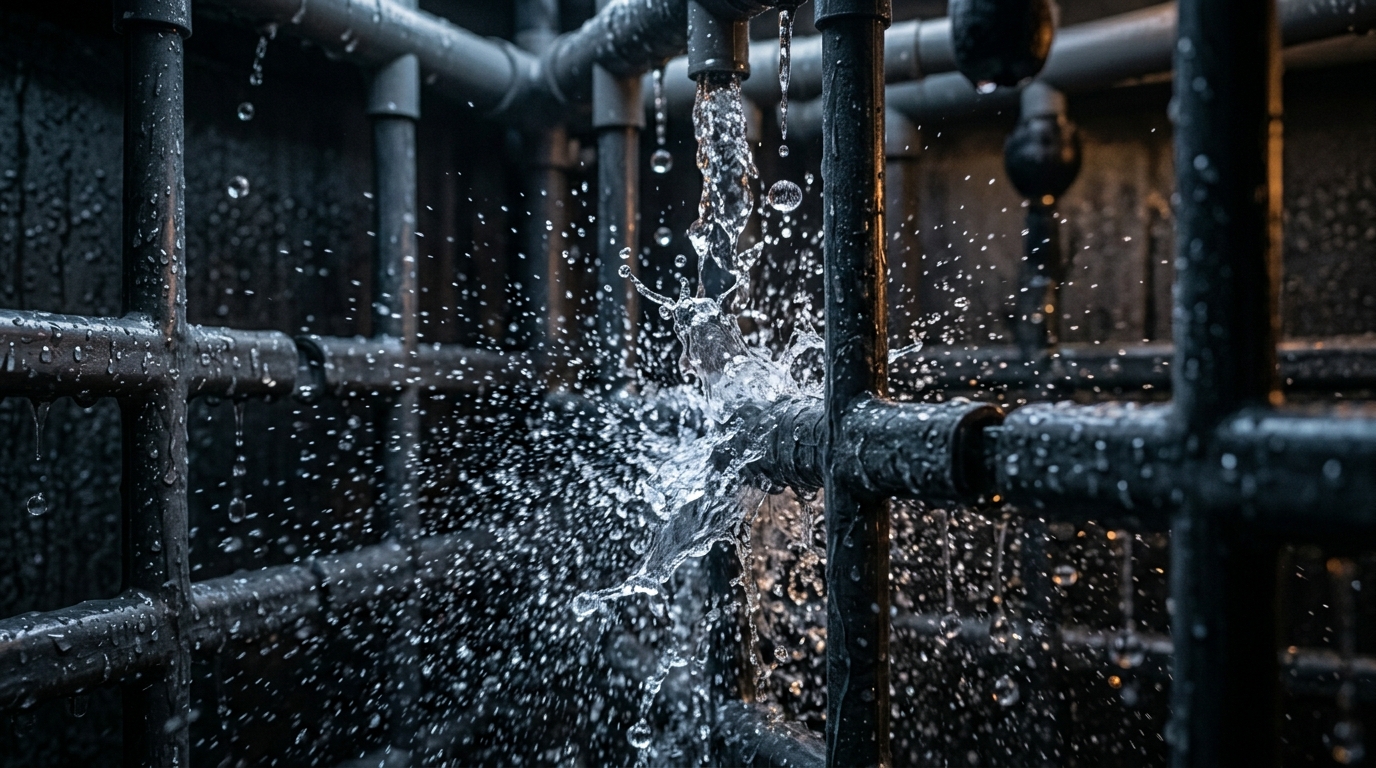
The key structural difference of Splash Fill is that it does not attempt to create a thin water film, but instead relies on the principle of impact to generate surface area. When hot water is sprayed downwards through spray nozzles, the water droplets collide with layers of Splash Bars or Grids. This impact causes the droplets to break apart into a massive number of tiny droplets (fragmentation).
This repeated fragmentation process across each fill layer increases the total surface area of the water exposed to the cold air flowing upwards (Counter-flow) or horizontally (Cross-flow). Although the theoretical Heat Transfer Area per Unit Volume of Splash Fill might not be as high as Film Fill, under real-world conditions with high suspended solids, Splash Fill can maintain consistent Thermal Performance because there are no narrow spaces prone to microbial accumulation.
Key Features and Fouling Resistance
A major problem for cooling tower systems in the petrochemical industry, power plants, or steel mills is the Total Suspended Solids (TSS) and mineral concentrations that can cause scaling. If a film-type medium is used, the narrow gaps quickly become sediment traps, leading to fouling and adding massive weight that could eventually collapse the fill structure.
Splash Fill solves this problem with an Open Structure, featuring the following key attributes:
- High Clog Resistance: The large open spaces between fill layers allow sediments and bacteria to pass through without accumulating.
- Structural Integrity: The materials used are typically thicker than usual to withstand chemical corrosion and mechanical stress.
- Predictable Performance: Thermal efficiency does not drop abruptly like in film systems when the water becomes heavily contaminated.
Material Science and Types of Splash Fill
Selecting the right material for Splash Fill requires considering the operating temperature and the chemical properties of the wastewater:
- Polypropylene (PP): The most popular material for heavy-duty applications due to its high-temperature tolerance (over 80°C in special grades) and excellent chemical resistance. It is often manufactured using injection molding to achieve high structural strength.
- Polyvinyl Chloride (PVC): Used in applications requiring fire-retardant properties and is generally more cost-effective. It is suitable for conditions where the water temperature is not excessively high.
- Splash Grid vs. Splash Bar: The Grid format emphasizes even water distribution in all directions, making it ideal for counter-flow cooling towers. Meanwhile, the Bar format is widely used in large cross-flow cooling towers.
Engineering Design: Balancing Pressure and Surface Area
When designing a cooling system with Splash Fill, thermal engineers must meticulously calculate the Static Pressure Drop. Although Splash Fill is highly porous, the dense mist of fragmented water droplets also creates resistance to airflow.
Additionally, the Fill Depth and Vertical Spacing must be optimized in accordance with the L/G (Liquid-to-Gas) Ratio to ensure that the air can fully extract the latent heat from the water without causing excessive Drift Losswhere water droplets are carried away by the exhaust air.
Maintenance and Performance Inspection
One of the major advantages of Splash Fill is its Inspectability. Engineers can clearly see the internal condition of the fill much better than in film systems. Maintenance therefore focuses on:
- Checking for sagging of the support beams or the fill itself.
- Cleaning using high-pressure jetting, which can be done without damaging the sturdy material.
- Evaluating the Approach temperature to verify if the cooling performance remains within the designed standards.
Conclusion
Splash Fill is a powerful solution for cooling tower systems requiring maximum durability in harsh environments. Even though it requires a larger footprint than Film Fill systems to achieve the same thermal efficiency, its High Availability (continuous operation without frequent maintenance shutdowns) and its ability to handle highly contaminated water make it the most cost-effective long-term investment for heavy industries.